
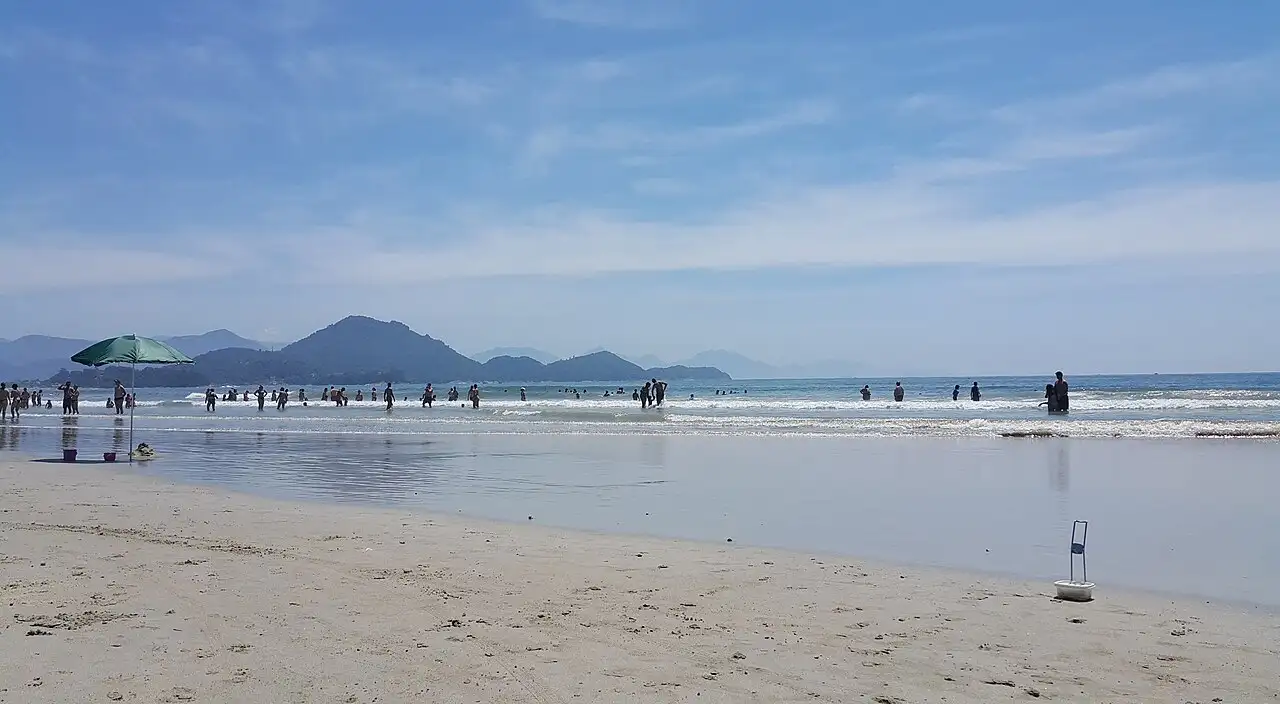

Ubatuba, Caraguatatuba, Ilhabela and Paraty share the same stretch of coast, between the Serra do Mar and the ocean, but offer different experiences. The choice depends on what each person is looking for: urban infrastructure, varied beaches, island life or historical heritage. We have gathered comparable figures for each city to help with the decision, whether for a trip, for living or for investing. There is no best city in absolute terms; there is the city best suited to each profile.
Distances and access
- Caraguatatuba is the closest to the capital: about 172 km via the Ayrton Senna–Carvalho Pinto corridor and the Rodovia dos Tamoios, which ends in the city.
- Ilhabela is about 205 km from São Paulo. Access is via the ferry crossing from São Sebastião, about 2.4 km long and taking approximately 15 minutes.
- Ubatuba is about 220 km away via the Tamoios plus a further 48 km along the Rio-Santos from Caraguatatuba, or about 225 km via the Rodovia Oswaldo Cruz, through Taubaté.
- Paraty, already in the state of Rio de Janeiro, is about 330 km from São Paulo and about 70 km from Ubatuba via the Rio-Santos.
On holidays, travel time increases on all routes, and there may be lines for the Ilhabela ferry. Vehicles licensed in these three neighboring cities are exempt from the Environmental Preservation Fee charged by Ubatuba.
Population and urban infrastructure
Caraguatatuba is the largest city on São Paulo's North Coast, with 134,873 inhabitants in the 2022 Census, and concentrates regional services, such as the regional hospital that receives higher-complexity cases from neighboring cities. Ubatuba has 92,981 inhabitants and Ilhabela 34,934, according to the same Census. For Paraty, IBGE estimates 47,668 inhabitants in 2025.
In practice, Caraguatatuba has the region's largest population and is the direct endpoint of the Rodovia dos Tamoios, the main link to the Vale do Paraíba. Ubatuba combines a downtown with services and coastal neighborhoods spread along more than 100 km of coastline. Ilhabela depends on the ferry for its link to the mainland, and Paraty, in the neighboring state, has its historic center as its main landmark.
Beaches and nature
- Ubatuba: about 102 beaches along more than 100 km of coastline, according to City Hall, and about 80% of its territory within the Parque Estadual da Serra do Mar. The variety ranges from urban beaches to secluded coves, with waves renowned for surfing.
- Caraguatatuba: 17 beaches, between the ocean and the Serra do Mar, with part of its territory in the same state park.
- Ilhabela: 41 beaches on the main island and about 84.3% of its territory protected by the Parque Estadual de Ilhabela. Wikipedia lists 360 waterfalls in the archipelago.
- Paraty: together with Ilha Grande, it forms Brazil's first mixed site on the UNESCO World Heritage List, inscribed on July 5, 2019, which encompasses the historic center, the Parque Nacional da Serra da Bocaina and the APA de Cairuçu, among other areas.
Tourism profile
Estimates for the 2025/2026 summer give a sense of each destination's scale: about 4 million visitors in Ubatuba, according to City Hall; 1.4 million in Caraguatatuba, according to its local City Hall; and more than 1 million in Ilhabela between December and Carnival, according to the city's tourism observatory.
- Ubatuba attracts families, surfers, hikers and those looking for a different beach every day, with tours to islands such as Anchieta and Couves.
- Caraguatatuba is well suited to those who want beaches with the infrastructure of a mid-sized city and quick access via the Tamoios.
- Ilhabela is sought after by those who want island life, water sports, waterfalls and trails.
- Paraty stands out for cultural and historical tourism: its center has stone-paved streets closed to vehicle traffic, baroque churches and colonial houses, as well as boat tours around the bay.
How to choose
- If the priority is being close to São Paulo and having a full range of services, Caraguatatuba tends to be the most practical choice.
- If the idea is to alternate between urban and wild beaches, trails and boat tours from a single base, Ubatuba offers the greatest variety of beaches.
- If the wish is for an island atmosphere, with exceptionally well-preserved nature, Ilhabela is the option, bearing in mind its dependence on the ferry.
- If the main interest is history, colonial architecture and culture, Paraty is the destination of reference.
Many visitors combine all four cities in a single trip, since the Rio-Santos connects them all. For those considering buying property, it is worth visiting each city in both the high and low seasons and comparing access, services and the zoning rules of each municipality.
More in The City
Sources consulted (15)
- São Paulo–Caraguatatuba road route (São Paulo Sem Segredos) (emsampa.com.br)
- São Paulo–Ubatuba road route (São Paulo Sem Segredos) (emsampa.com.br)
- Ubatuba–Caraguatatuba road route (São Paulo Sem Segredos) (emsampa.com.br)
- How to Get to Ubatuba (Melhores Destinos) (guia.melhoresdestinos.com.br)
- IBGE Ubatuba: demographic data (Ceps Brasil, based on IBGE) (cepsbrasil.com.br)
- Ubatuba Climate Change Adaptation and Resilience Plan (Prefeitura de Ubatuba) (ubatuba.sp.gov.br)
- More than 100 beaches, about 540 bird species and rain in every month of the year (Correio Braziliense, October 2026) (correiobraziliense.com.br)
- Caraguatatuba (Wikipedia) (en.wikipedia.org)
- Ilhabela (Wikipedia) (en.wikipedia.org)
- IBGE Ilhabela: demographic data (Ceps Brasil, based on IBGE) (cepsbrasil.com.br)
- Paraty (Wikipedia) (en.wikipedia.org)
- Paraty and Ilha Grande join the World Heritage List (United Nations Brazil, 2019) (brasil.un.org)
- Litoral Norte expected to receive nearly 8 million tourists this summer (Nova Imprensa, 18/12/2025) (novaimprensa.com)
- Work Plan of the Santa Casa de Ubatuba (Prefeitura de Ubatuba, 2024) (terceirosetor.ubatuba.sp.gov.br)
- Ubatuba adjusts the Environmental Preservation Fee (Metrópoles, 08/01/2025) (metropoles.com)
Information verified on 29/10/2026. Found something outdated? Let our team know.